
Watches by budget — From under $500 to over $10,000.
Five tiers. The watches worth your money at every price point. From the first mechanical watch to the haute-horlogerie heirloom.
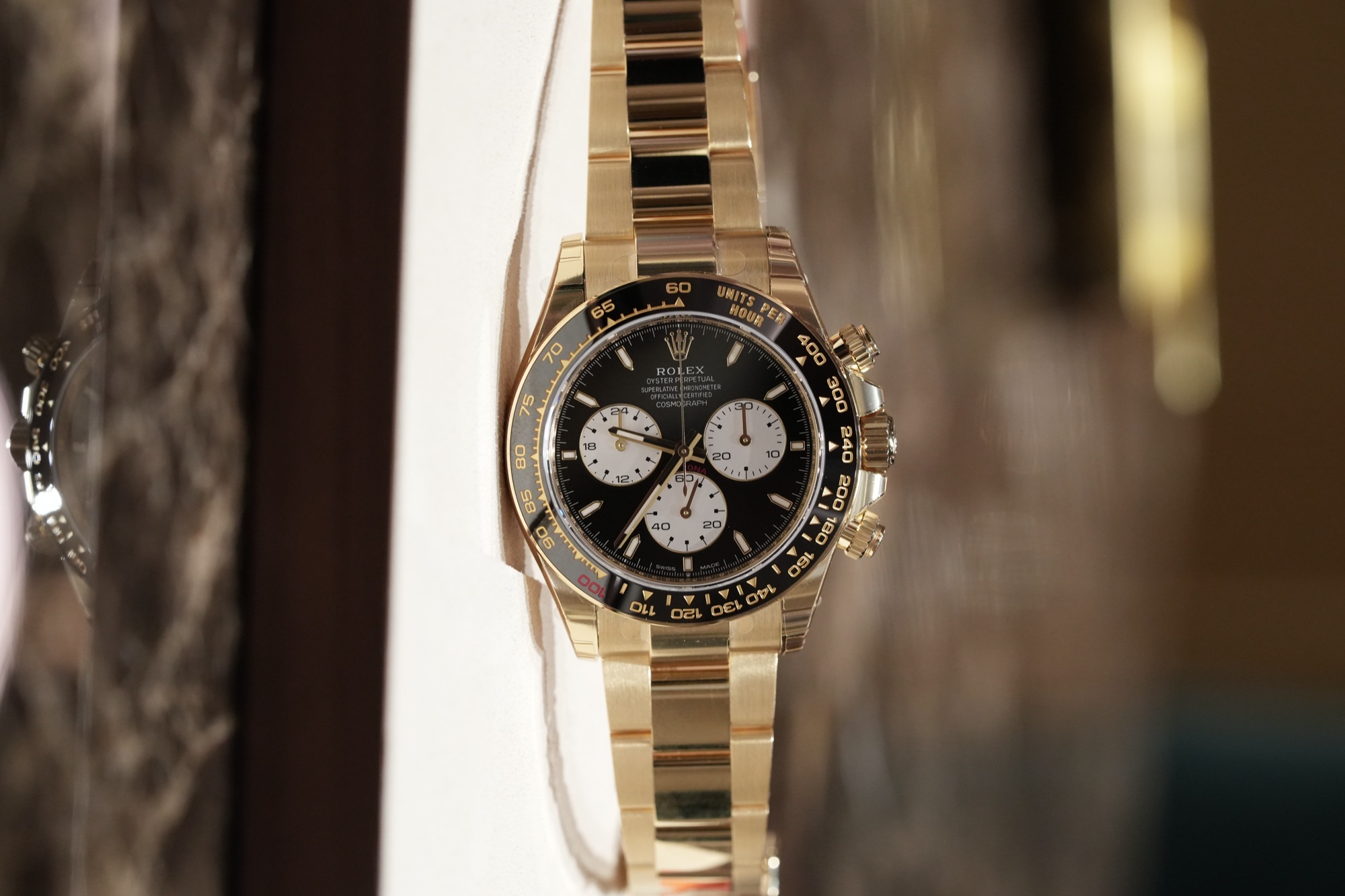 Photo by Verygoodlord, via Wikimedia Commons, CC BY-SA 4.0 (source)
Where you sit on the curve
Under $500
Where serious mechanical watchmaking starts. Seiko 5, Citizen NY0040 Promaster, Tissot Gentleman Powermatic 80.
TierUnder $1,000
The first-real-watch tier. Seiko Prospex SPB143, Tissot PRX Powermatic, Hamilton Khaki, Mido Multifort.
TierUnder $5,000
First-luxury territory. Tudor Black Bay 58, Omega Aqua Terra 38, Tag Heuer Carrera Heuer 02, Cartier Tank Solo.
TierUnder $10,000
Established luxury. Rolex Submariner no-date, Omega Speedmaster Professional, IWC Pilot Mark XX, Cartier Santos.
TierOver $10,000
Haute horlogerie. Patek Calatrava, AP Royal Oak, Vacheron Patrimony, JLC Reverso Tribute Duoface, Lange 1.
On the buying decision
How much should I spend on my first luxury watch?
Most enthusiasts recommend $3,000-$5,000 as the entry point for a "first serious mechanical watch." At that range you get in-house movements (or modified ETA at minimum), genuine luxury construction, and watches you'll keep for years. Buying below $1,500 gets you good mechanical watches but typically not luxury ones; buying above $10,000 commits you to multi-thousand-dollar service intervals and a watch with significant resale variance. The Tudor Black Bay 58 ($3,950) is the most-recommended single watch at the entry-luxury tier.
Are luxury watches a good investment?
Specific models are. Steel sport Rolex (Submariner, Daytona, GMT-Master), Patek Philippe Nautilus and Aquanaut, and Audemars Piguet Royal Oak have appreciated 2-4× retail over the past decade. Most other luxury watches depreciate 20-40% the moment they leave the boutique. Buy because you want to wear it; treat appreciation as a bonus. Watches that consistently appreciate share three traits: limited production, deep collector demand, and verified provenance.
Should I buy at retail or grey market?
Depends on the model. Watches with retail availability (most non-Rolex Swiss makers) are usually cheaper at retail. Watches with multi-year retail waitlists (Submariner, Daytona, Pepsi GMT, Nautilus, Royal Oak steel) trade at 30-150% over retail on the grey market — but waiting takes years. Established grey-market dealers (Watches of Switzerland gray, Bobs, Watchbox, Hodinkee Shop pre-owned) provide authenticated pieces with warranty. Buyers should know the realistic retail-vs-grey premium for any specific reference before transacting.
What makes a watch hold value?
Limited production relative to demand, brand recognition with collectors, design continuity (watches that haven't been redesigned recently have stronger collector pedigree), and verified provenance (original box and papers, full service history). Watches that hold value best: steel sport Rolex (Submariner, GMT-Master, Daytona), Patek Philippe Nautilus and Aquanaut, AP Royal Oak in steel, Vacheron Constantin Overseas in steel. Watches that depreciate: precious metal versions of common references, fashion brand watches (most non-Swiss luxury watches), and limited editions tied to celebrity collaborations or non-watch brand partnerships.
When should I upgrade from quartz to mechanical?
When you start caring about the movement. Quartz watches keep better time (±5 seconds per month vs ±5 seconds per day for chronometers). Mechanical watches require more service ($300-$1,500 every 5-10 years), are more delicate, and lose time. The reasons to choose mechanical: appreciation for the engineering, the tactile experience of winding (manual) or feeling the rotor (automatic), the longevity (a properly serviced mechanical watch can run for centuries), and the cultural significance. Most enthusiasts choose mechanical despite the inconveniences. Quartz remains a defensible choice for buyers who prioritize accuracy and low maintenance.