
Skip to content
Maker profile · Geneva · Founded 1839

Patek Philippe Heirlooms in the making.

12 min readPublished

The auction-record house. Family-owned. Slower than the rest. Seven of the ten most expensive watches ever sold — and counting.

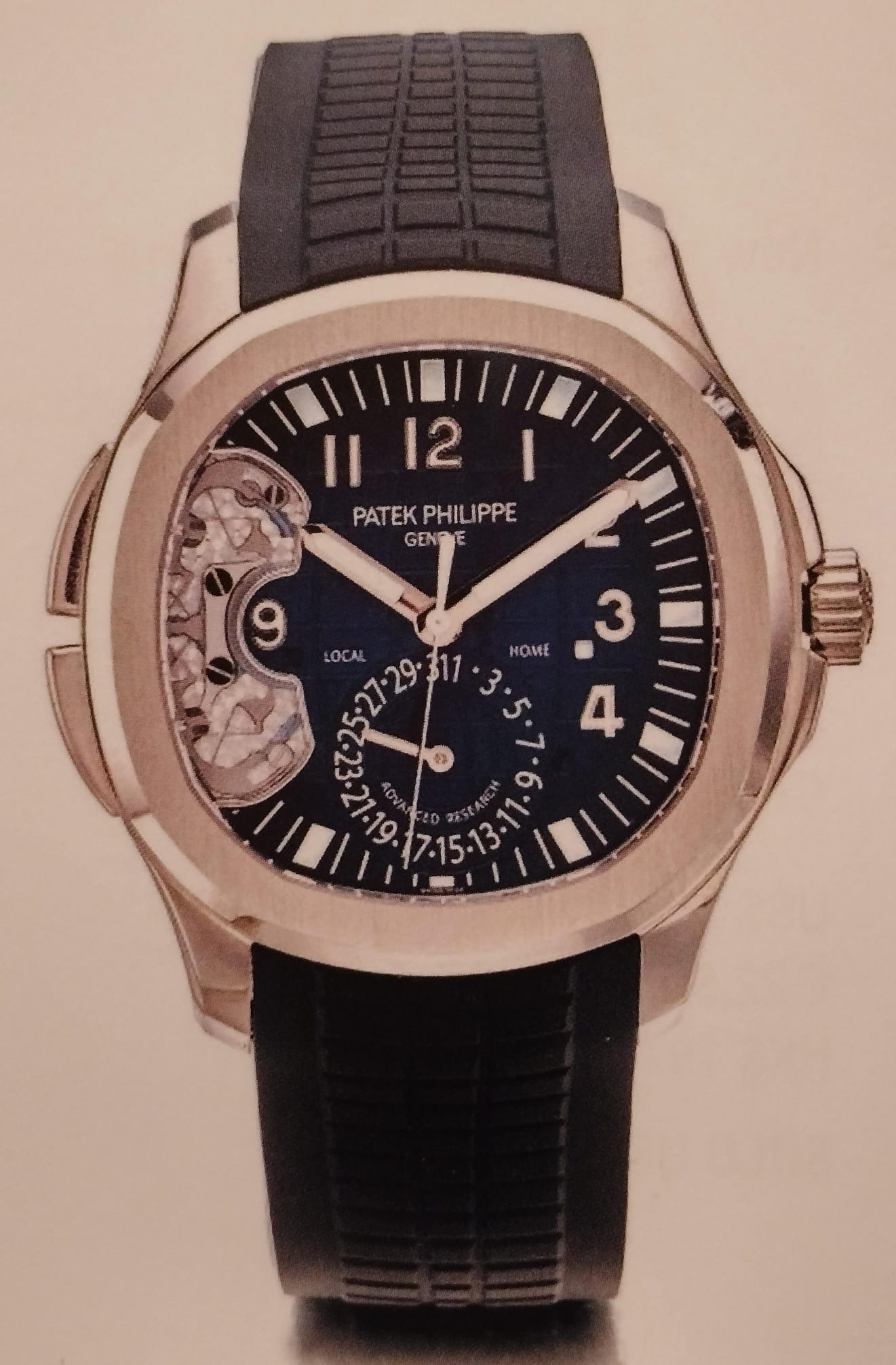
Patek Philippe Calatrava dial close-upEMore98, CC BY-SA 4.0, via Wikimedia Commons (source)

What is Patek Philippe?

Patek Philippe is a Swiss luxury watch manufacturer founded 1839 in Geneva, family-owned by the Stern family since 1932. Annual production: roughly 70,000 watches. The house holds over 100 horological patents and has invented more than 20 base calibers. Seven of the ten most expensive watches ever sold at auction are Patek — including the Grandmaster Chime Ref. 6300A-010 ($31 million, 2019) and the Henry Graves Jr. Supercomplication ($24 million, 2014). The Patek Philippe Seal — introduced 2009 — is the strictest quality standard in commercial watchmaking.

History

Antoni Patek, a Polish émigré who had fled the failed November Uprising against Russia in 1830, founded a watch business in Geneva in 1839 with fellow Pole François Czapek. The firm Patek, Czapek & Cie. produced around 200 pocket watches a year, hand-engraved and finished, often in cloisonné enamel cases. In 1844 Patek met the French watchmaker Adrien Philippe at the Paris Industrial Expo. Philippe had just invented the keyless crown winding mechanism. In 1845 Czapek departed and Patek partnered with Philippe; the firm became Patek, Philippe & Cie.
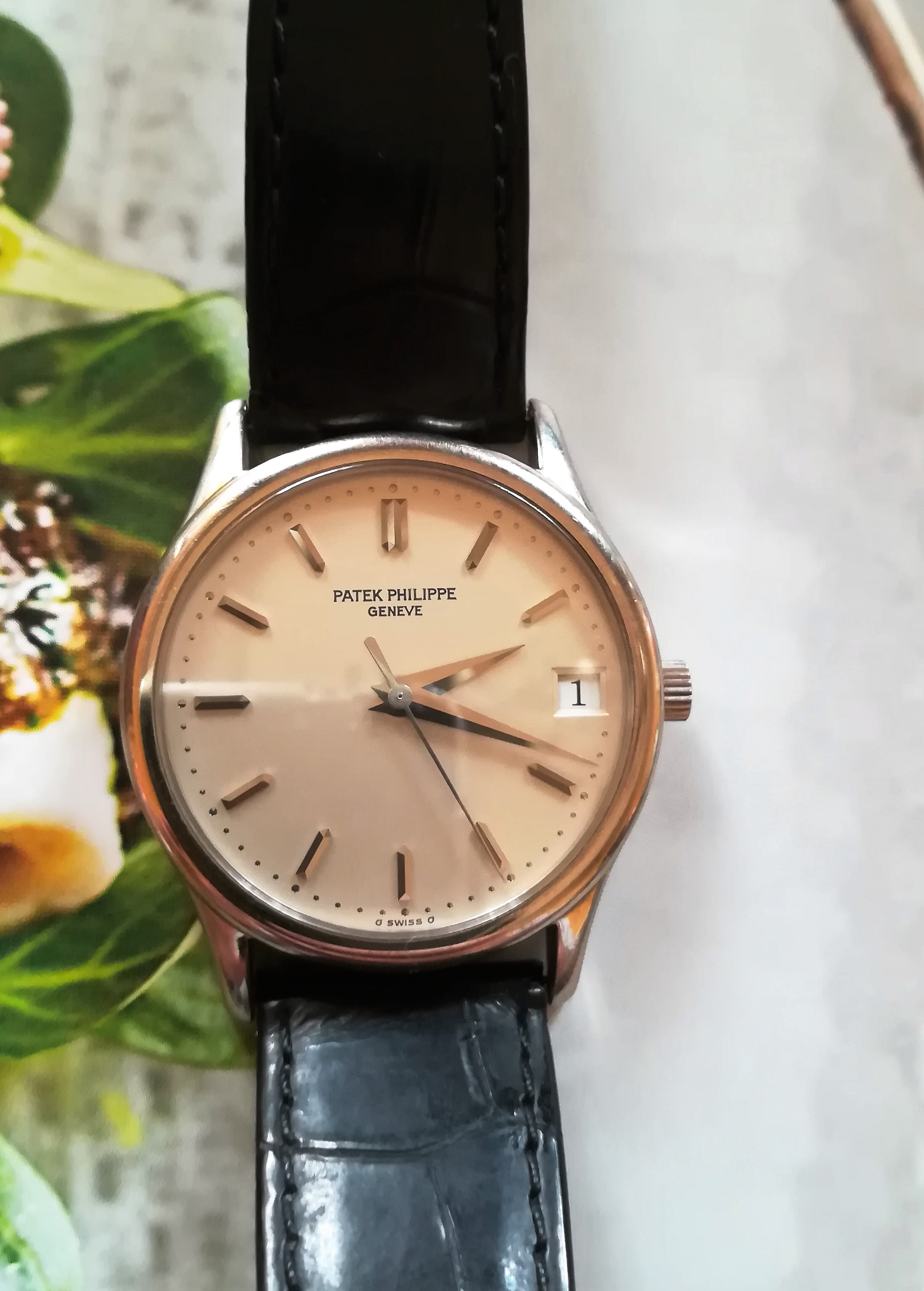
Patek Philippe — Calatrava (dress watch)
Clyde94, CC BY-SA 4.0, via Wikimedia Commons (source)

The technical record across the next century:

You never actually own a Patek Philippe. You merely look after it for the next generation.

The Stern family motto, Patek catalogues 2010s onward
  • 1845 — Adrien Philippe's keyless winding mechanism (the foundation of modern self-winding watches)
  • 1868 — First Swiss wristwatch, made for Countess Koscowicz of Hungary
  • 1925 — First wristwatch with perpetual calendar (Reference 97 975)
  • 1937 — First wristwatch with split-seconds chronograph
  • 1962 — First wristwatch with central second hand chronograph
  • 1989 — Caliber 89, the most complicated portable mechanical timepiece of its era (33 complications)
  • 2014 — Caliber 300, the Grandmaster Chime, the brand's 175th-anniversary piece (20 complications)

The Stern family acquired Patek Philippe in 1932 during the Great Depression. Charles Stern and Jean Stern, dial-makers who had supplied Patek, bought the company when its previous owners faced bankruptcy. The Sterns have run it ever since — currently under Thierry Stern (President), with his father Philippe Stern as Honorary President. Production has remained small and family discipline has been preserved. The house has refused multiple acquisition approaches from luxury conglomerates.

In 2001 Patek opened the Patek Philippe Museum in Geneva — a four-floor exhibition of historical timepieces from the 16th century to the present. The Stern family also reinstituted the Patek Philippe Magazine in 1996, a biannual publication with contributions from Nobel laureates and bestselling authors. Few watch brands invest in cultural infrastructure at that scale.

Signature collections

Calatrava

Released 1932, the same year the Sterns bought the company. The Calatrava is the most refined dress-watch design in Swiss watchmaking — round, time-only or time-and-date, modest case sizes (33-39mm), and a discipline of clean lines. The modern 6119G ($25,560) and 5227G ($43,000) define the language. Patek's Calatrava cross logo dates from this collection's release and has become the brand's primary signature.

Nautilus

Released 1976, designed by Gérald Genta — the same designer who created the Royal Oak for Audemars Piguet four years earlier. The Nautilus brought integrated-bracelet steel sport luxury to Patek. The 5711/1A ($30,650 retail when discontinued in 2021) became the most-demanded modern luxury watch — peak secondary-market prices reached $160,000 in 2022 before normalizing toward $80,000-$100,000. Replaced by the white-gold 5811/1G ($77,500) and the new chronograph 5990. Steel Nautilus production continues in the 5990 and 5811 but allocation is heavily restricted.
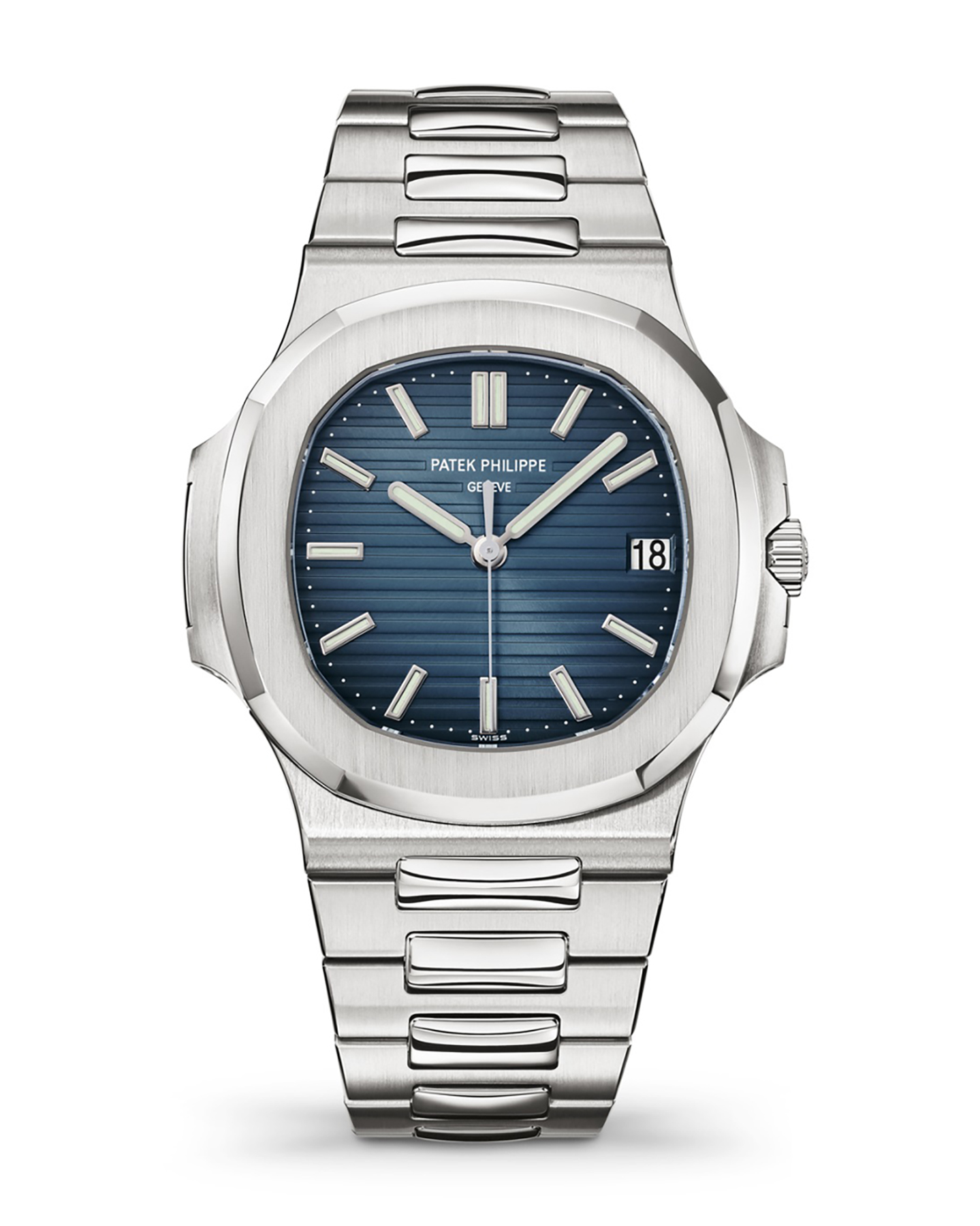
Patek Philippe — Nautilus 5711/1A-010
Patek Philippe SA, CC BY-SA 4.0, via Wikimedia Commons (source)

The Nautilus was Gérald Genta's second Royal Oak — but Patek waited four years to release theirs, and the resulting watch ages better than the original.

Aquanaut

Released 1997. A more sport-aggressive Nautilus alternative — rubber strap, embossed "tropical" dial pattern, slightly more masculine case proportions. The 5167A ($22,810) is the easiest Patek sport watch to allocate at retail and a genuinely modern design. The 5168G in white gold ($45,200) and the chronograph variants extend the line. Aquanaut Travel Time references — second time zone with 24-hour indicator — are particularly well-engineered.

Grand Complications

The technical apex. Perpetual calendars (5320G, 5236P), minute repeaters, split-seconds chronographs (5172G, 5370P), and combinations thereof. The 5270P perpetual calendar chronograph in platinum runs $200,000+. The Grandmaster Chime Ref. 6300A-010 — the brand's most complicated wristwatch with 20 complications including five chime modes — set the auction record at $31 million in 2019. These are not buying-tier watches; they're commissioning pieces, available only to long-standing Patek clients.

Price tiers

  • Entry — Calatrava 6119G ($25,560), Aquanaut 5167A ($22,810), Twenty-4 ($24,140-$30,810)
  • Mid — Calatrava 5227G ($43,000), Annual Calendar 5396 ($46,170), Aquanaut Travel Time 5164A ($53,700)
  • Sport flagship — Nautilus 5811/1G white gold ($77,500), Nautilus chronograph 5990 ($113,800)
  • Grand Complications — Perpetual calendar chronograph 5270 ($200K+), Minute repeater 5078 ($340K+), 5316 World Time minute repeater ($600K+)
  • Collector / commissioned — Grandmaster Chime ($2.6M+), Sky Moon Tourbillon, vintage Calatravas, Nautilus 5711 platinum, Henry Graves Supercomplications. Often six to eight figures.

What's worth knowing

Patek production rate is the constraint. At 70,000 watches a year against global demand, allocation is the operating reality at every retailer. First-time Patek buyers do not order Nautilus; they buy a Calatrava or an Aquanaut, build relationship with the boutique over years, and earn allocation toward harder pieces. The "first Patek" entry is part of brand strategy — a deliberate gate.

The Patek Philippe Seal — introduced 2009 to replace the Geneva Seal — applies to the whole watch. Movement finishing standards (chamfered bridges, polished screws, hand-applied Côtes de Genève), case finishing (mirror-polished surfaces, no tool marks), dial work, and even bracelet articulation must meet specified tolerances. Independent quality auditing happens within Patek; no third party certifies it. The standard exists because Patek decided the Geneva Seal was no longer strict enough.

Worn by Queen Victoria, Tolstoy, Marie Curie, Picasso, JFK, Tchaikovsky, Pope Pius IX. The cultural record is exceptional. The 1996 slogan reframes the buying transaction: you are not buying a watch but accepting custody of an heirloom. The line was written by the agency Leagas Delaney for a global campaign and has held since.

For the rest of the Holy Trinity:

For the recognition tier:

For the broader survey:

Frequently Asked

On Patek Philippe

How long does it take to make a Patek Philippe?

Even a basic Patek Philippe takes up to ten months to produce. The most complicated pieces — Grand Sonnerie, Grandmaster Chime, perpetual calendar minute repeaters — require up to 2.5 years. Production scales with the complication: simpler dress watches like the Calatrava can move through the workshops faster, while a Grandmaster Chime requires sequential hand-finishing of dozens of components by master watchmakers across multiple departments.

How many Patek Philippe watches are made each year?

Patek Philippe produces approximately 70,000 watches per year. The number is small relative to demand — Patek does not advertise extensively and intentionally limits production to maintain quality and exclusivity. The 1996 slogan ("You never actually own a Patek Philippe. You merely look after it for the next generation") reflects an explicit positioning as multi-generational heirlooms rather than mass luxury goods.

What is the Patek Philippe Seal?

The Patek Philippe Seal is the brand's proprietary quality standard, introduced in 2009 when Patek withdrew from the Geneva Seal. It applies to the entire watch — not just the movement. Standards include precision (-3 to +3 seconds per day for diameters 20mm or greater, stricter than COSC), hand-finishing of every visible component, and acoustic and aesthetic standards across the case, dial, hands, and bracelet. It is widely considered the most stringent quality standard in commercial watchmaking.

Why is the Nautilus so hard to buy?

The steel Nautilus 5711/1A — discontinued in 2021 — has become the most-demanded modern luxury watch. It traded at $25,000 retail and sold for $130,000-$160,000 on the secondary market at peak. Patek discontinued the reference partly to manage allocation pressure on retailers and partly to refresh the line. The replacement 5811/1G in white gold sits at $77,500 retail. Steel Nautilus production continues only in the 5990, 5990/1A, and the new 5811 references.

Which Patek Philippe is the best entry?

The Calatrava 6119G ($25,560) is the canonical entry — a 39mm white-gold dress watch with the in-house Caliber 30-255 PS, Clous de Paris bezel, and the cleanest Patek dial language. The Calatrava 5226G ($35,330) and 5227G ($43,000) are dressier alternatives. The Aquanaut 5167A in steel ($22,810) is the sport entry — easier to allocate than the Nautilus and recognized as a genuinely modern Patek design. All three sit in the $20K-$45K range that defines first-Patek territory.

Who founded Patek Philippe?

Patek Philippe was founded in 1839 by Antoni Patek (a Polish watchmaker) and François Czapek under the name Patek, Czapek & Cie. In 1845 Czapek left and Patek partnered with Adrien Philippe, the inventor of the keyless winding mechanism. The firm became Patek, Philippe & Cie. The Stern family acquired the company in 1932 during the Depression and have owned it as a private family business ever since — making Patek Philippe one of the few major watchmakers still in family hands.

What is Patek Philippe?

Patek Philippe is a Swiss luxury watch manufacturer founded 1839 in Geneva, family-owned by the Stern family since 1932. The house produces approximately 70,000 watches per year, holds over 100 horological patents, and has invented more than 20 base calibers. Seven of the ten most expensive watches ever sold at auction are Patek Philippes, including the Grandmaster Chime Ref. 6300A-010 ($31 million in 2019) and the Henry Graves Jr. Supercomplication ($24 million in 2014). The Patek Philippe Seal — introduced 2009 — is widely considered the strictest quality standard in commercial watchmaking.

How long does it take to make a Patek Philippe?

Even a basic Patek Philippe takes up to ten months to produce. The most complicated pieces — Grand Sonnerie, Grandmaster Chime, perpetual calendar minute repeaters — require up to 2.5 years. Production scales with the complication: simpler dress watches like the Calatrava can move through the workshops faster, while a Grandmaster Chime requires sequential hand-finishing of dozens of components by master watchmakers across multiple departments.

How many Patek Philippe watches are made each year?

Patek Philippe produces approximately 70,000 watches per year. The number is small relative to demand — Patek does not advertise extensively and intentionally limits production to maintain quality and exclusivity. The 1996 slogan ("You never actually own a Patek Philippe. You merely look after it for the next generation") reflects an explicit positioning as multi-generational heirlooms rather than mass luxury goods.

What is the Patek Philippe Seal?

The Patek Philippe Seal is the brand's proprietary quality standard, introduced in 2009 when Patek withdrew from the Geneva Seal. It applies to the entire watch — not just the movement. Standards include precision (-3 to +3 seconds per day for diameters 20mm or greater, stricter than COSC), hand-finishing of every visible component, and acoustic and aesthetic standards across the case, dial, hands, and bracelet. It is widely considered the most stringent quality standard in commercial watchmaking.

Why is the Nautilus so hard to buy?

The steel Nautilus 5711/1A — discontinued in 2021 — has become the most-demanded modern luxury watch. It traded at $25,000 retail and sold for $130,000-$160,000 on the secondary market at peak. Patek discontinued the reference partly to manage allocation pressure on retailers and partly to refresh the line. The replacement 5811/1G in white gold sits at $77,500 retail. Steel Nautilus production continues only in the 5990, 5990/1A, and the new 5811 references.

Which Patek Philippe is the best entry?

The Calatrava 6119G ($25,560) is the canonical entry — a 39mm white-gold dress watch with the in-house Caliber 30-255 PS, Clous de Paris bezel, and the cleanest Patek dial language. The Calatrava 5226G ($35,330) and 5227G ($43,000) are dressier alternatives. The Aquanaut 5167A in steel ($22,810) is the sport entry — easier to allocate than the Nautilus and recognized as a genuinely modern Patek design. All three sit in the $20K-$45K range that defines first-Patek territory.

Who founded Patek Philippe?

Patek Philippe was founded in 1839 by Antoni Patek (a Polish watchmaker) and François Czapek under the name Patek, Czapek & Cie. In 1845 Czapek left and Patek partnered with Adrien Philippe, the inventor of the keyless winding mechanism. The firm became Patek, Philippe & Cie. The Stern family acquired the company in 1932 during the Depression and have owned it as a private family business ever since — making Patek Philippe one of the few major watchmakers still in family hands.

What is The Essential Watch Guide?

The Essential Watch Guide is an editorial publication covering luxury watchmaking — Swiss heritage houses, dive watches, vintage timepieces, and the makers worth knowing. Coverage includes Rolex, Patek Philippe, Audemars Piguet, Vacheron Constantin, Omega, Tudor, and dozens more. Editorial focus: history, signature collections, what to look for when buying, and how value holds.

Which Swiss watch brands are the most prestigious?

The "Holy Trinity" of Swiss watchmaking is Patek Philippe (founded 1839), Audemars Piguet (1875), and Vacheron Constantin (1755) — the three houses widely considered the apex of haute horlogerie. Rolex is the most recognized worldwide; Jaeger-LeCoultre supplies movements to many top brands; Blancpain is the oldest continuously operating watchmaker (founded 1735). Independent makers like F.P. Journe and Richard Mille operate at the same tier with smaller production runs.

What makes a watch "Swiss made"?

Swiss law requires that a watch labeled "Swiss made" must have its movement assembled in Switzerland, its movement cased in Switzerland, undergone final inspection by the manufacturer in Switzerland, and have at least 60% of its production cost incurred in Switzerland. The standard is enforced by the Federal Council and the Federation of the Swiss Watch Industry FH.