
What is the Omega Seamaster?
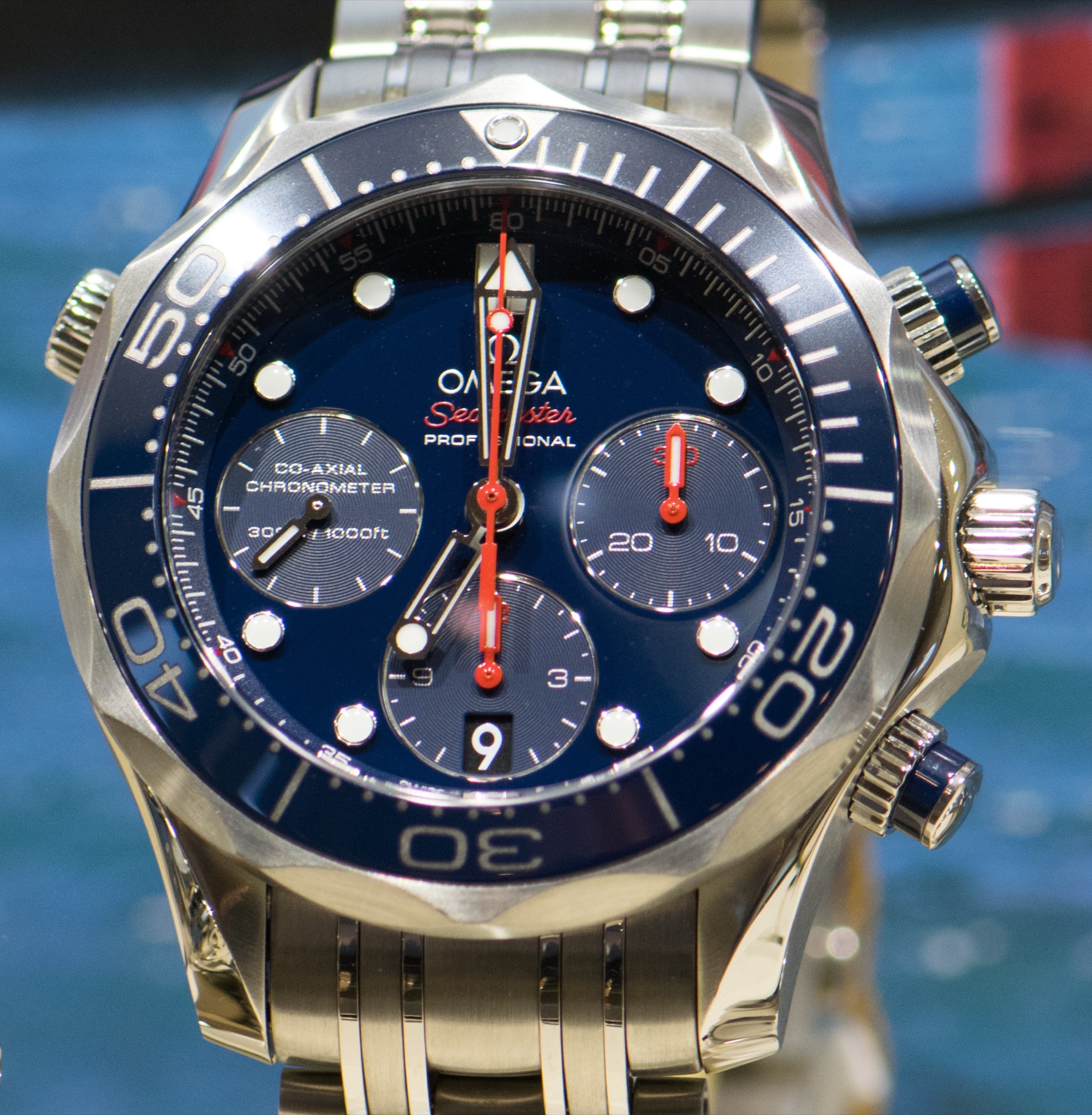
The Omega Seamaster is Omega's dive collection — released 1948 for Omega's 100th anniversary. Best known as the official James Bond watch since GoldenEye (1995). Modern variants: Diver 300M ($5,500-$5,800, 42mm, 300m WR, the Bond reference), Planet Ocean ($6,800-$11,300, deeper-rated diver), Aqua Terra ($5,800-$6,400, dressier dial without rotating bezel), Ploprof 1200m ($11,300, the world's deepest serially produced dive watch). All current variants are Master Chronometer certified — METAS-tested for 15,000-gauss magnetic resistance, accuracy 0/+5 seconds per day.
The Bond connection
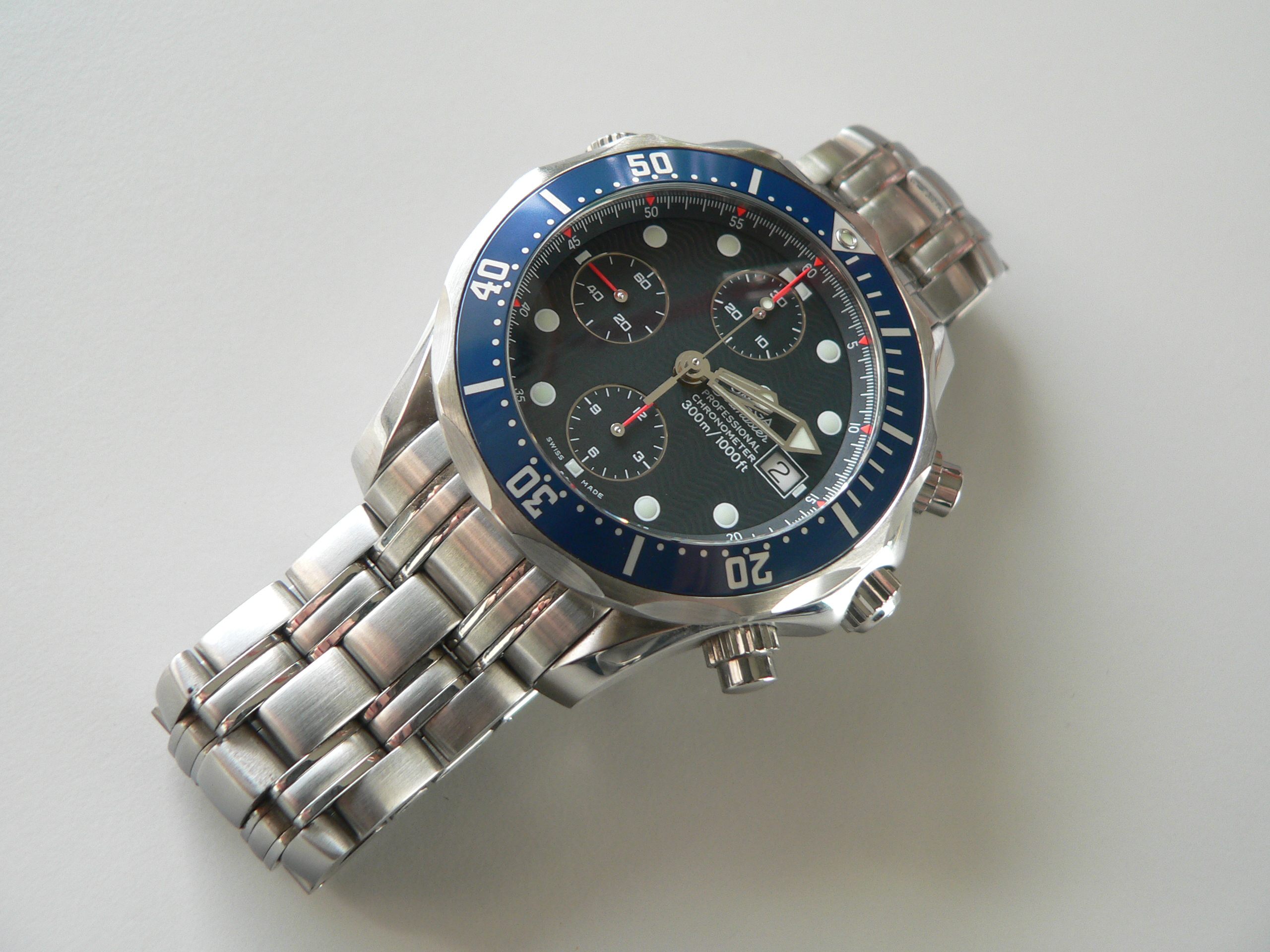
The Seamaster predates the Bond films by nearly fifty years. Released 1948 for Omega's 100th anniversary, it was the brand's first water-resistant collection — built on the rubber O-ring gaskets that British Royal Navy submariners had relied on through the 20th century. By 1995, when costume designer Lindy Hemming was casting the watch for Pierce Brosnan's GoldenEye, the Seamaster had four decades of military credibility behind it. The Submariner that previous Bonds had worn was iconic but Rolex; Hemming wanted something British-adjacent and her own. The Seamaster Diver 300M Quartz (Reference 2541.80) hit the screen in November 1995. Omega has supplied every Bond watch since.
Connery had a Submariner. Brosnan needed his own. The Seamaster was already there — we just put it on screen.
Lindy Hemming, Bond costume designer 1995-2008
What started as a costuming choice became Omega's most durable marketing asset. The Brosnan era ran four films. Daniel Craig's tenure ran five — and Omega built specific commemorative editions for each, including the limited Seamaster Diver 300M for No Time to Die (2021) on a NATO strap, with vintage Naiad lock crown. The cultural footprint is the modern Seamaster's anchor: the watch is older than the Bond connection, but most buyers come to the watch through the films first.
The collection
Diver 300M
The Bond watch. 42mm steel case, ceramic bezel, wave-pattern dial, helium escape valve at 10, Master Chronometer Co-Axial Caliber 8800. Retail $5,500-$5,800 in steel; up to $35,000 in precious metals. The most-recognized modern Seamaster and the easiest first-Omega dive watch. The wave dial is laser-engraved on a polished surface — the texture catches light differently as the watch moves on the wrist, and is the visual signature of the line.
Planet Ocean
The deeper-rated dive flagship. 43.5mm or 39.5mm cases, 600m water resistance, ceramic bezel and dial on certain references. Master Chronometer Caliber 8900. Big Blue ($11,300) is the headline variant; Ultra Deep (15,000m WR, the watch built off the descent to the Mariana Trench) is the cult choice. The Planet Ocean is the genuine professional-grade diver in the lineup — proportions are more aggressive than the Diver 300M, water resistance is double, and the 8900 movement adds an extra mainspring barrel for 60-hour reserve.
Aqua Terra
The everyday dress-sport. 38mm-41mm cases, no rotating bezel, "teak deck" dial. Master Chronometer Caliber 8800. Retail $5,800-$6,400. The most-recommended Omega for one-watch buyers — pairs with both casual and formal dress. The Aqua Terra is technically a Seamaster (150m water resistance) but reads as a dress watch on the wrist, which is why it ends up on more collectors' lists than the explicit dive references.
Ploprof 1200m
The technical deep diver. 55mm × 48mm asymmetric case, 1,200m water resistance, locking dive-bezel pusher. Master Chronometer Caliber 8912. Retail $11,300. Originally released 1970 for professional saturation divers; the cult Omega. The case shape is unmistakable — it does not pretend to be wearable in a suit, and the buyers know that.
Master Chronometer
Master Chronometer is Omega's certification standard introduced 2015 in partnership with the Swiss Federal Institute of Metrology (METAS). To qualify, a watch must first be COSC chronometer-certified, then pass eight additional METAS tests — including 15,000-gauss magnetic field exposure, pressure stability under simulated diving conditions, and accuracy under multiple positions and wind states. Master Chronometer accuracy: 0/+5 seconds per day. The 15,000-gauss spec is the headline number; standard chronometers are tested to roughly 1,000 gauss.
The Diver 300M is now METAS-certified to 15,000 gauss anti-magnetic. That's three orders of magnitude beyond what any human ever experiences. Omega built the spec because they could.
The Caliber 8800 (in Diver 300M and Aqua Terra 38mm) and Caliber 8900 (in Planet Ocean and Aqua Terra 41mm) are the workhorse movements. Both use Co-Axial escapements — George Daniels' design that Omega industrialized in 1999, which reduces friction at the escapement and extends service intervals. Service is recommended every 5-7 years; service costs run $700-$1,200 depending on reference. The movement spec sheet is more aggressive than anything Rolex publishes for the Submariner.
Price tiers
- Entry — Aqua Terra 38mm ($5,800), Diver 300M steel ($5,500-$5,800)
- Mid — Aqua Terra 41mm ($6,400), Planet Ocean 39.5mm/43.5mm ($6,800-$8,400)
- Top — Planet Ocean Big Blue ($11,300), Ploprof 1200m ($11,300), Ultra Deep ($14,000+)
- Precious-metal Diver 300M (gold case, gold bracelet): $30,000-$35,000
- Pre-owned market for Bond commemoratives — particularly No Time to Die and 50th Anniversary editions — trade 10-30% above retail when available
What's worth knowing
Allocation is not a problem. Unlike Rolex, Omega does not run a Submariner-style waitlist. Most Seamaster references are available at MSRP from authorized dealers — sometimes immediately, sometimes after a short wait for specific dial/strap combinations. Buyers who hate the Rolex AD experience often end up here for that reason.
The Bond connection cuts both ways. It made the Seamaster a household name, but it also locks the brand to a specific cultural register. Some collectors find that limiting; others find it the entire reason to buy. Either reaction is valid — just know which one you're having before you pull the trigger.
Aqua Terra is the underrated entry. Most one-watch buyers who land at the Omega counter end up with the Diver 300M because of the Bond cachet. The Aqua Terra — same Master Chronometer movement, no rotating bezel, dressier dial — covers more outfits and more occasions. Long-term collectors often regret skipping it.
Service is brand-only for current production. Independent watchmakers can service older Co-Axial calibers but the modern Master Chronometer movements (8800/8900-series) need Omega's service centers. Intervals: 5-7 years. Cost: $700-$1,200 typical, more for precious-metal cases.