
Skip to content
Maker profile · Schaffhausen · Founded 1868

IWC The pilot watch standard.

8 min readPublished

Schaffhausen since 1868. The Mark XI shaped every pilot watch since. The Portugieser is one of the cleanest dress designs in Swiss watchmaking.

IWC Big Pilot dialPhoto by Ferengi (Wikimedia Commons), CC BY-SA 3.0 (source)

What is IWC?

IWC (International Watch Company) is a Swiss luxury watchmaker founded 1868 in Schaffhausen by American watchmaker Florentine Ariosto Jones. Annual production: 100,000-120,000 watches. Known for the pilot-watch standard (Mark XI, 1948), the Portugieser (1939), and the Ingenieur (1955). Part of the Richemont Group since 2000.

History

Florentine Ariosto Jones was 27 when he moved from Boston to Schaffhausen in 1868. He had two ambitions: combine American industrial production methods with Swiss craftsmanship, and use hydroelectric power from the Rhine to drive serial movement production. He named the company the International Watch Company precisely because the venture combined American capital, Swiss labor, and global ambition. Jones returned to America in 1876; the company carried on under successive Swiss owners.

IWC's technical record is heavily military. The Mark IX (1936) was the first watch with anti-magnetic protection designed specifically for aviation use. The Mark XI (1948) became the British Royal Air Force's standard navigator wristwatch and was issued to RAF officers until the late 1980s. The Big Pilot (1940) was 55mm — designed for use over a flight jacket — and remains in production today at 46.2mm. The Portugieser (1939), the Ingenieur (1955), and the Aquatimer (1967) extend the technical-watch range.

Anti-magnetic to 80 gauss. Hacking seconds. Dial readable in cockpit twilight. These were not preferences — they were RAF requirements.

IWC's 1948 Mark 11 Royal Air Force spec sheet

Signature collections

Pilot (Mark XX, Big Pilot, Pilot Chronograph)

The pilot collection. Pilot Mark XX ($5,800-$6,400) — modern descendant of the Mark XI, 40mm, soft iron inner case, in-house Caliber 32111. Big Pilot ($14,000-$50,000 depending on materials) — 46.2mm, the over-flight-jacket reference, characteristic onion crown. Pilot Chronograph ($6,800) — 41mm, day-date, ETA-derived movement. Top Gun limited editions (matte ceramic cases, military positioning) extend the line.
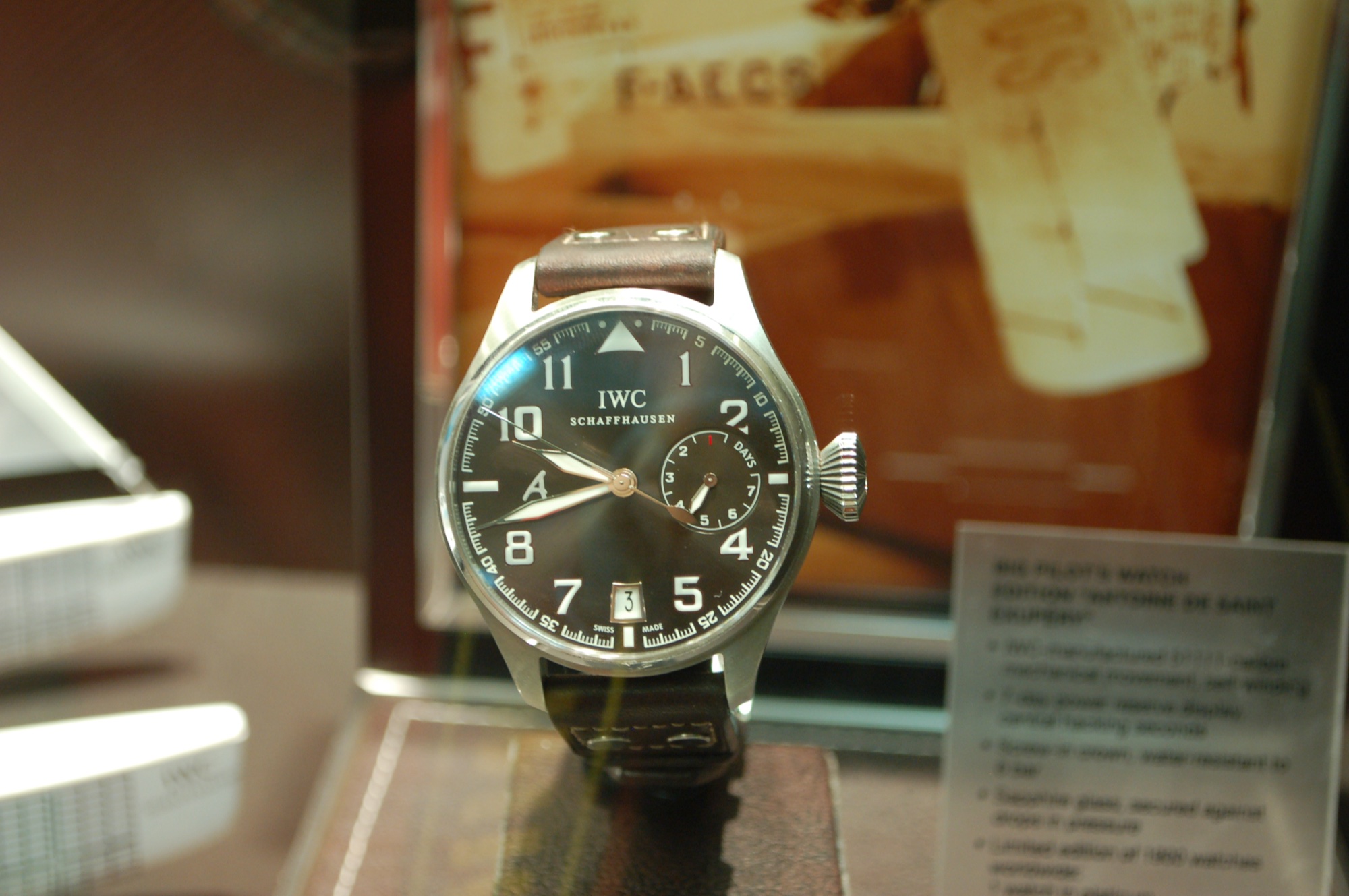
IWC — Big Pilot Saint-Exupery edition
Photo by Ferengi (Wikimedia Commons), CC BY-SA 3.0 (source)

Portugieser

The dress-flagship collection. Portugieser Automatic 40 ($14,200) — 40mm, sub-seconds at 9, in-house Caliber 82200. Portugieser Chronograph ($8,900) — 41mm, the most-recognized chronograph in the line, features the iconic dial layout (sub-dials at 6 and 12). Portugieser Perpetual Calendar ($26,400-$45,000), Portugieser Hand-Wound Eight Days ($24,400), Portugieser Yacht Club ($14,800). Some of the cleanest dial language in Swiss watchmaking.

The Portugieser was a marine-chronometer movement in a wristwatch case. In 1939 that was a contradiction. Eighty years later it’s still the cleanest oversized dress watch in production.
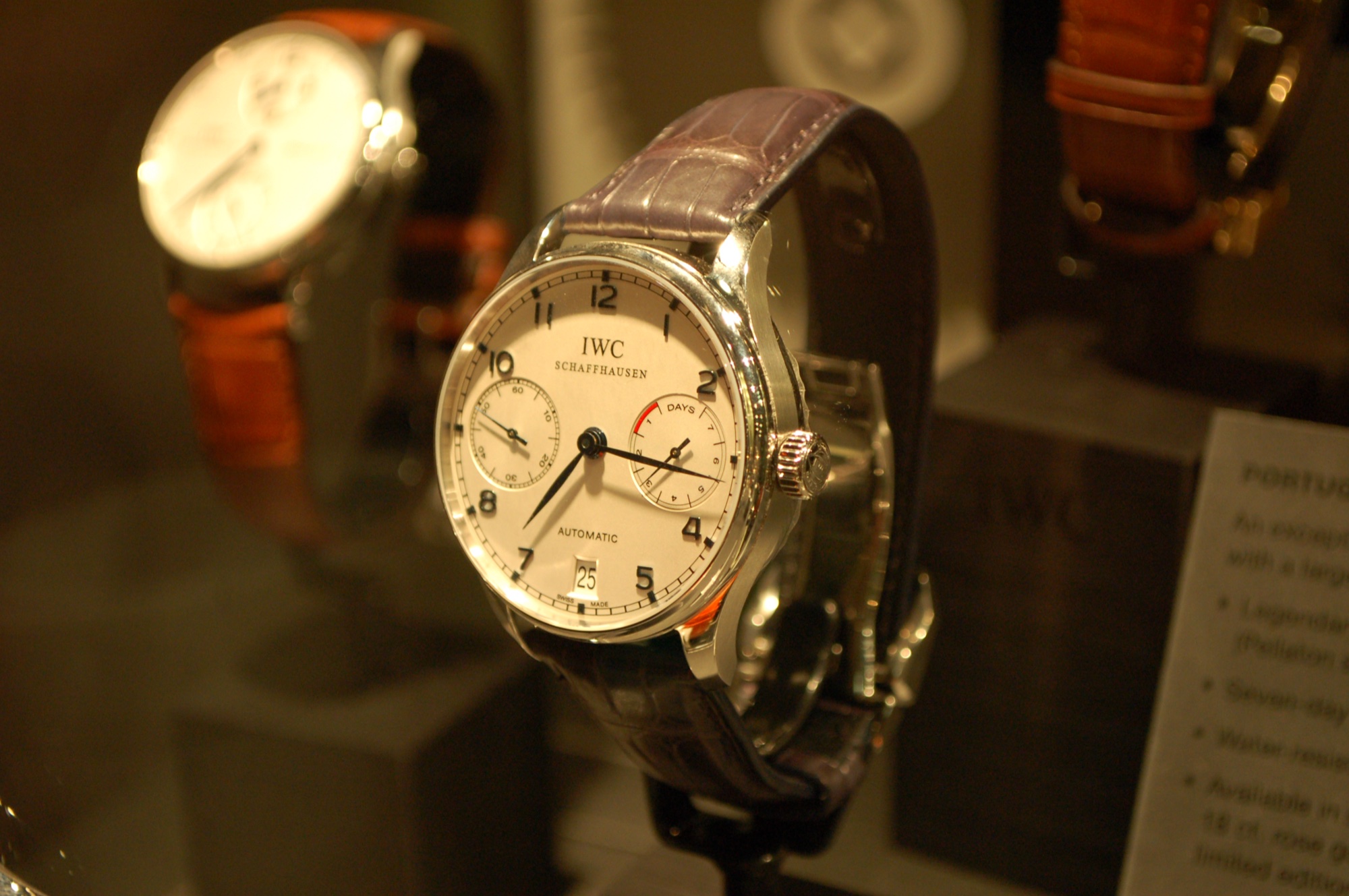
IWC — Portugieser Automatic
Photo by Ferengi (Wikimedia Commons), CC BY-SA 3.0 (source)

Portofino

The classical dress collection. Portofino Automatic 39 ($4,950) is IWC's most accessible entry. Roman numerals, slim hands, classical Italian elegance. Sized for both men and women across 34mm-39mm cases.

Ingenieur

The anti-magnetic professional watch. Released 1955 with magnetic resistance up to 80,000 A/m. Redesigned 2023 with an integrated bracelet and 40mm case ($11,800). The 2023 redesign drew comparisons to the Royal Oak — both designs by Gérald Genta (Genta designed the Ingenieur SL Reference 1832 in 1976).

Aquatimer

The dive collection. 300m-2,000m water resistance, internal rotating bezel system. Aquatimer Automatic 42 ($6,400). Smaller production than the Pilot and Portugieser lines.

Price tiers

  • Entry — Portofino Automatic 39 ($4,950), Pilot's Watch Mark XX ($5,800)
  • Mid — Pilot Chronograph 41 ($6,800), Aquatimer Automatic 42 ($6,400), Portugieser Chronograph ($8,900)
  • Flagship — Big Pilot 43 ($14,000), Portugieser Automatic 40 ($14,200), Ingenieur Automatic 40 ($11,800), Portofino Yacht Club ($14,800)
  • Grand complications — Portugieser Perpetual Calendar ($26,400-$45,000), Da Vinci Tourbillon, Portugieser Sidérale Scafusia ($750,000+)
  • Collector — Vintage Mark XI references, Cousteau Aquatimers, original Big Pilots. $5K-$50K

What's worth knowing

IWC's pricing is meaningfully gentler than Richemont sister brands JLC and Vacheron at the entry level. A Pilot's Mark XX at $5,800 sits in a different price bracket than a JLC Master Ultra Thin at $10,800 or a Vacheron Patrimony at $24,500 — but uses an in-house movement of comparable quality. For buyers who want a serious in-house Swiss watch under $7,000, IWC is the most defensible pick.

The Portugieser Sidérale Scafusia ($750,000+) is one of IWC's most ambitious technical pieces — features a sky chart customized to the owner's coordinates, sidereal time indicator, sunrise/sunset display, and tourbillon. The complication mix is unusual at IWC's typical price points and reflects the brand's technical depth at the high end.

The brand maintains a strong customization program for the Big Pilot — bespoke dials, military-style commissioning, engraving. The Pilot collection is one of the few luxury Swiss collections where buyers can specify configuration meaningfully without entering Patek or Vacheron commissioning territory.

Read more

Frequently Asked

On IWC

Why is IWC associated with pilot watches?

IWC produced the first true pilot watch in 1936 — the Mark IX, with anti-magnetic protection, soft iron inner case, and large legible dial designed for cockpit use. The Mark XI (1948) became the British Royal Air Force's standard navigator watch and set the design language IWC has followed ever since: large numerals, oversized triangle at 12, legible chapter ring, manual or self-winding movement. The modern Pilot collection — Mark XX, Big Pilot, Pilot Chronograph — descends directly from these mid-century military references.

What is the Portugieser?

The Portugieser is IWC's dressier flagship line — released 1939 after two Portuguese merchants asked IWC to produce a wristwatch with the precision of a marine chronometer. The Caliber 74 pocket-watch movement was housed in a 41.5mm wristwatch case (oversized for the era). The modern Portugieser Automatic 40 ($14,200) and Portugieser Chronograph ($8,900) preserve the design language: clean dial, slim hands, railroad chapter ring, pebble-shaped lugs. The Portugieser is widely considered IWC's most refined collection.

Who founded IWC?

Florentine Ariosto Jones, an American watchmaker from Boston, founded IWC (International Watch Company) in 1868 in Schaffhausen, Switzerland. Jones moved to Schaffhausen specifically to combine American industrial production methods with Swiss watchmaking craftsmanship and to take advantage of hydroelectric power from the Rhine River for serial movement production. IWC remains in Schaffhausen and is the only major Swiss watchmaker located in the eastern part of the country (most are clustered in the Jura, Geneva, or Vallée de Joux).

Which IWC is the best entry?

The Pilot's Watch Mark XX ($5,800-$6,400) is the canonical entry — 40mm case, in-house Caliber 32111, soft iron inner case for anti-magnetism, the modern descendant of the Mark XI military reference. The Portofino Automatic ($4,950) is the dress-watch entry. The Portugieser Automatic 40 ($14,200) is the more serious entry for buyers willing to spend more. All three offer in-house movements at price points well below the Trinity makers.

Who owns IWC?

IWC has been part of the Richemont Group since 2000. Richemont also owns Cartier, Vacheron Constantin, Jaeger-LeCoultre, Panerai, Piaget, A. Lange & Söhne, Montblanc, and Officine Panerai. IWC operates with significant production autonomy — movements are designed and assembled in Schaffhausen — but commercial strategy is coordinated at the Group level.

How many IWC watches are made each year?

IWC produces approximately 100,000-120,000 watches per year. The number is meaningfully larger than the Trinity makers but smaller than Rolex or Omega. Production is split between mainstream collections (Pilot, Portofino) at higher volumes and limited or hand-finished pieces (Portugieser Perpetual Calendar, Da Vinci Tourbillon) at much lower scales.

What is IWC?

IWC (International Watch Company) is a Swiss luxury watchmaker founded 1868 in Schaffhausen by American watchmaker Florentine Ariosto Jones. Annual production: approximately 100,000-120,000 watches. The brand is known for the pilot watch standard (Mark XI for the British RAF, 1948), the Portugieser (1939, the first wristwatch with marine-chronometer precision), and the Ingenieur anti-magnetic professional watch (1955). Part of the Richemont Group since 2000.

Why is IWC associated with pilot watches?

IWC produced the first true pilot watch in 1936 — the Mark IX, with anti-magnetic protection, soft iron inner case, and large legible dial designed for cockpit use. The Mark XI (1948) became the British Royal Air Force's standard navigator watch and set the design language IWC has followed ever since: large numerals, oversized triangle at 12, legible chapter ring, manual or self-winding movement. The modern Pilot collection — Mark XX, Big Pilot, Pilot Chronograph — descends directly from these mid-century military references.

What is the Portugieser?

The Portugieser is IWC's dressier flagship line — released 1939 after two Portuguese merchants asked IWC to produce a wristwatch with the precision of a marine chronometer. The Caliber 74 pocket-watch movement was housed in a 41.5mm wristwatch case (oversized for the era). The modern Portugieser Automatic 40 ($14,200) and Portugieser Chronograph ($8,900) preserve the design language: clean dial, slim hands, railroad chapter ring, pebble-shaped lugs. The Portugieser is widely considered IWC's most refined collection.

Who founded IWC?

Florentine Ariosto Jones, an American watchmaker from Boston, founded IWC (International Watch Company) in 1868 in Schaffhausen, Switzerland. Jones moved to Schaffhausen specifically to combine American industrial production methods with Swiss watchmaking craftsmanship and to take advantage of hydroelectric power from the Rhine River for serial movement production. IWC remains in Schaffhausen and is the only major Swiss watchmaker located in the eastern part of the country (most are clustered in the Jura, Geneva, or Vallée de Joux).

Which IWC is the best entry?

The Pilot's Watch Mark XX ($5,800-$6,400) is the canonical entry — 40mm case, in-house Caliber 32111, soft iron inner case for anti-magnetism, the modern descendant of the Mark XI military reference. The Portofino Automatic ($4,950) is the dress-watch entry. The Portugieser Automatic 40 ($14,200) is the more serious entry for buyers willing to spend more. All three offer in-house movements at price points well below the Trinity makers.

Who owns IWC?

IWC has been part of the Richemont Group since 2000. Richemont also owns Cartier, Vacheron Constantin, Jaeger-LeCoultre, Panerai, Piaget, A. Lange & Söhne, Montblanc, and Officine Panerai. IWC operates with significant production autonomy — movements are designed and assembled in Schaffhausen — but commercial strategy is coordinated at the Group level.

How many IWC watches are made each year?

IWC produces approximately 100,000-120,000 watches per year. The number is meaningfully larger than the Trinity makers but smaller than Rolex or Omega. Production is split between mainstream collections (Pilot, Portofino) at higher volumes and limited or hand-finished pieces (Portugieser Perpetual Calendar, Da Vinci Tourbillon) at much lower scales.

What is The Essential Watch Guide?

The Essential Watch Guide is an editorial publication covering luxury watchmaking — Swiss heritage houses, dive watches, vintage timepieces, and the makers worth knowing. Coverage includes Rolex, Patek Philippe, Audemars Piguet, Vacheron Constantin, Omega, Tudor, and dozens more. Editorial focus: history, signature collections, what to look for when buying, and how value holds.

Which Swiss watch brands are the most prestigious?

The "Holy Trinity" of Swiss watchmaking is Patek Philippe (founded 1839), Audemars Piguet (1875), and Vacheron Constantin (1755) — the three houses widely considered the apex of haute horlogerie. Rolex is the most recognized worldwide; Jaeger-LeCoultre supplies movements to many top brands; Blancpain is the oldest continuously operating watchmaker (founded 1735). Independent makers like F.P. Journe and Richard Mille operate at the same tier with smaller production runs.

What makes a watch "Swiss made"?

Swiss law requires that a watch labeled "Swiss made" must have its movement assembled in Switzerland, its movement cased in Switzerland, undergone final inspection by the manufacturer in Switzerland, and have at least 60% of its production cost incurred in Switzerland. The standard is enforced by the Federal Council and the Federation of the Swiss Watch Industry FH.