
Skip to content
Maker profile · Florence / Neuchâtel · Founded 1860

Panerai The Italian frogmen watch.

From the Italian Royal Navy combat divers of 1936 to a Richemont luxury house. The cushion case is the brand. Wrist presence is the point.

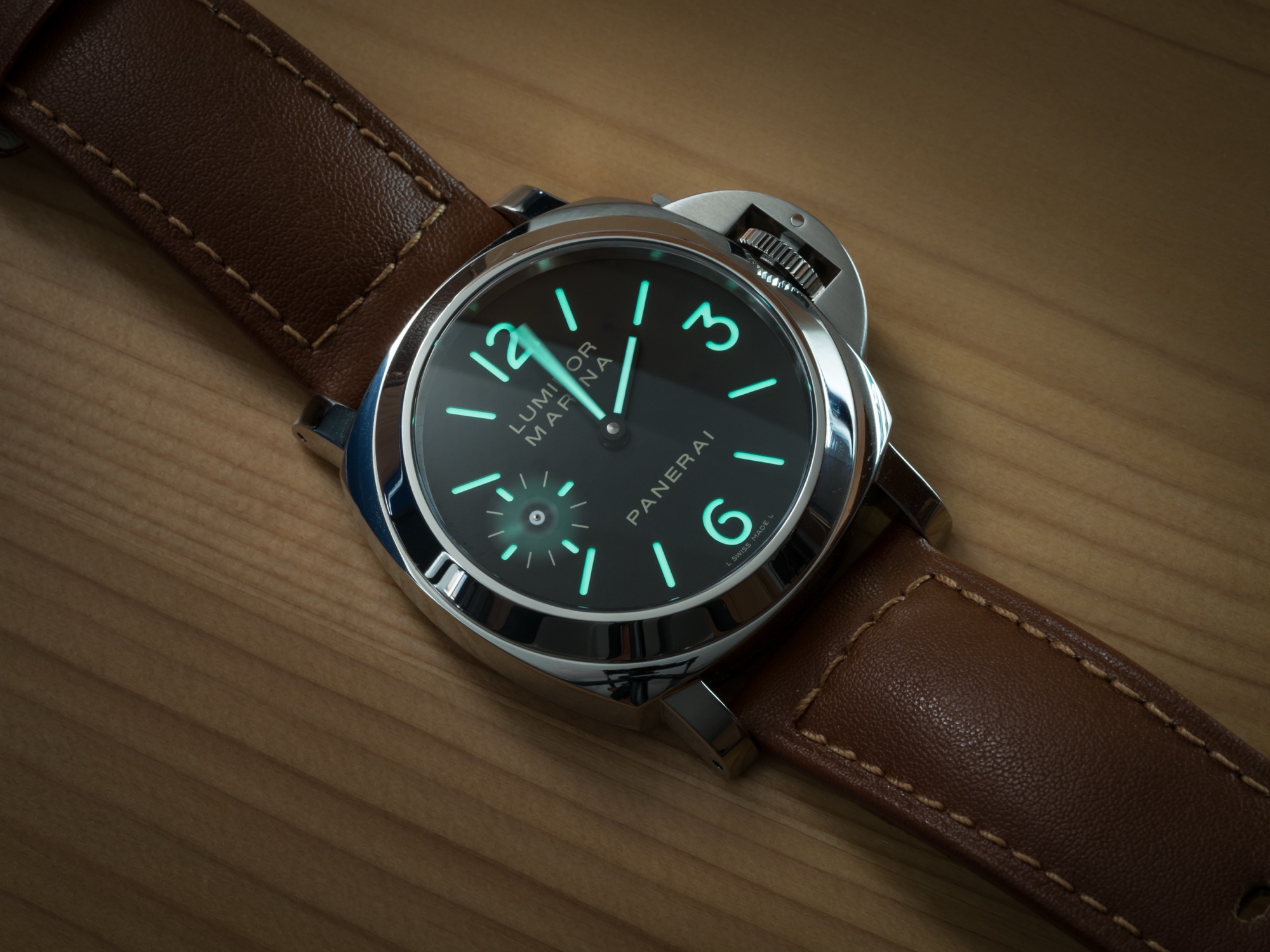
Panerai Luminor cushion casePhoto by Daniel Zimmermann via Flickr / Wikimedia Commons, CC BY 2.0 (source)

What is Panerai?

Officine Panerai is a luxury watch manufacturer founded 1860 in Florence, Italy. From 1936 until the late 1980s, Panerai supplied watches exclusively to the Italian Royal Navy combat divers (the Decima Flottiglia MAS). The brand launched consumer watches in 1993 and was acquired by Richemont in 1997. Modern manufacturing is in Neuchâtel, Switzerland. Panerai is known for the cushion case, the Luminor crown guard (1949), and large-presence dive watches.

History

Giovanni Panerai opened a watchmaker's workshop in Florence in 1860. The shop also served as Florence's first watchmaking school. Panerai's grandson Guido Panerai partnered with the Italian Royal Navy starting around 1900 — supplying timing instruments, depth gauges, and compass equipment for naval applications.

In 1936 the Italian Royal Navy commissioned Panerai to design a watch for its combat-diver unit, the Decima Flottiglia MAS — frogmen who used limpet mines and manned torpedoes to attack enemy shipping. The resulting Radiomir (1936) was a 47mm cushion-case wristwatch with radium-painted dials, wire lugs welded directly to the case, and a Rolex-supplied 618 movement. Panerai produced Radiomirs in extremely small numbers — perhaps 300-500 pieces total across the Royal Navy contract.

The Luminor (1949) replaced radium with tritium and introduced the brand's most recognizable feature: the crown-protecting bridge — a hinged lever that locks the crown into a sealed position. The mechanism solved a recurring problem with the Radiomir, where the crown could be inadvertently pulled or knocked, breaching water resistance.

Panerai's consumer watch program began in 1993 with the Luminor and Mare Nostrum chronograph. Sylvester Stallone wore a vintage Panerai in the 1996 film Daylight, generating significant collector interest. Richemont acquired the brand in 1997 and built it into a major luxury maker. The 2002 move from Italian-made to Swiss-made manufacturing (Neuchâtel) standardized production but raised some collector concerns about Italian heritage erosion. The post-2002 era has been commercially successful.

Signature collections

Luminor

The most-recognized Panerai. Luminor Marina ($6,800-$8,400) — 44mm, P.9010 movement, three-day power reserve, classic crown guard. Luminor Marina 1950 ($7,200) — slightly different case proportions referencing the 1950 military prototype. Luminor GMT ($8,200), Luminor Chrono ($10,400). The Luminor is the entry to Panerai's aesthetic.

Radiomir

The wire-lug heritage collection. Radiomir 1940 ($6,200) — 42mm-47mm cases, wire lugs welded to the case, no crown guard. Radiomir Black Seal ($6,200), Radiomir California ($7,800, references the 1936 California dial). The Radiomir is the more dressed and historically pure Panerai.

Submersible

The dive flagship. Submersible 42 ($9,800), Submersible 47mm ($14,200), Submersible Bronzo ($24,000 in bronze case, develops patina), Submersible BMG-Tech ($22,400). 300m water resistance, rotating dive bezel, designed for actual underwater use. The Submersible is the most technical Panerai.

Luminor Due

The slim, dress-leaning collection. Luminor Due ($5,200-$7,800) — 38mm-42mm cases, much thinner than the standard Luminor (about 11mm vs 14-15mm for the regular Luminor), no crown guard or vestigial crown guard. The Luminor Due is Panerai's most wearable everyday watch.

Mare Nostrum and special editions

The chronograph and limited editions. Mare Nostrum ($24,000-$60,000) — 52mm chronograph reissue. Special Editions tied to Italian military commemorations, motorsport, and design collaborations. Often produced in runs of 100-500 pieces.

Price tiers

  • Entry — Luminor Due ($5,200-$7,800), Radiomir 1940 ($6,200), Luminor Base ($6,200)
  • Mid — Luminor Marina ($6,800-$8,400), Luminor Marina 1950 ($7,200), Luminor GMT ($8,200)
  • Flagship — Submersible 42 ($9,800), Luminor Chrono ($10,400), Submersible 47mm ($14,200)
  • Bronze, BMG-Tech, special materials — Submersible Bronzo ($24,000), Submersible BMG-Tech ($22,400)
  • Limited editions — Mare Nostrum ($24K-$60K), L\'Astronomo ($150K+), 1955 Luminor (vintage; sold $478K at auction in 2014)
  • Vintage — Original 1936 Radiomirs (perhaps a dozen survive in private hands), 1940s-1950s military Luminors. $200K-$2M

What's worth knowing

Panerai is divisive. The cushion case and oversized proportions (42mm-47mm typical) make it one of the largest mainstream luxury watches — the Luminor wears noticeably bigger than most 40mm watches because of the cushion shape and 14-15mm thickness. Buyers either love the wrist presence or find it excessive. There is no in-between.

The "sandwich dial" construction is a brand signature. Panerai dials use two metal layers — a top layer with the numerals cut out, and a bottom layer with luminescent material visible through the cutouts. The construction was developed for the original Radiomir and produces the deep, slightly recessed dial appearance that distinguishes Panerai from other dive watches.

Panerai vintage collecting is its own ecosystem — the small original production runs, the military provenance, and the historical scarcity create a market where authentication is paramount and prices reach seven figures. Modern Panerai is a more conventional luxury watch market, but the vintage market preserves the brand's Italian-Royal-Navy origin story.

Read next

Frequently Asked

On Panerai

Is Panerai Italian or Swiss?

Both. Officine Panerai was founded in Florence, Italy, in 1860 and supplied watches and instruments to the Italian Royal Navy. The brand was acquired by Richemont in 1997 and now manufactures in Neuchâtel, Switzerland — meeting Swiss-made standards. The Italian heritage shapes the design language (cushion case, Italian model names, Mediterranean dive-watch positioning), while the Swiss manufacture handles modern movement development and finishing. Panerai is one of the few luxury watch brands to claim a meaningful Italian identity in modern watchmaking.

What is the difference between Radiomir and Luminor?

The Radiomir was Panerai's first dive watch — released 1936 for the Italian Royal Navy's combat divers. It used radium-painted dials (the original "Radiomir" luminescent compound) and wire lugs welded to the case. The Luminor (1949) replaced radium with the safer "Luminor" tritium compound and introduced the iconic crown-protecting bridge — a hinged lever that locks the crown into the case for waterproofing. Modern Radiomir references preserve the wire lug aesthetic; Luminor references have the integrated crown guard. Both styles remain in current production.

What is the Panerai cushion case?

The Panerai cushion case is the brand's signature shape — a square case with rounded corners, lying somewhere between round and square. The shape originated with the 1936 Radiomir and has been the brand's house style for nearly 90 years. Modern Panerai cushion cases run 38mm-47mm, with most modern references at 42mm or 44mm. The cushion shape gives Panerai significant wrist presence — these are not dressy or subtle watches.

Which Panerai is the best entry?

The Luminor Marina ($6,800-$8,400) is the canonical entry — 44mm cushion case, in-house P.9010 movement, classic Luminor crown guard, "sandwich" dial construction. The Radiomir 1940 ($6,200) is the wire-lug entry. The Luminor Due ($5,200-$7,800) is the slimmer, dressier entry — 38mm-42mm cases, thinner profile. All three sit in the $5K-$8.5K range that defines first-Panerai territory.

Are Panerai movements in-house?

Most modern Panerai movements are in-house — the P.9000 family, P.6000 family, and P.2000 family of calibers are all developed and manufactured at Panerai's Neuchâtel facility. Earlier Panerai movements (1990s-early 2000s) were ETA/Unitas movements modified by Panerai. The shift to in-house movements began around 2005 and accelerated through the 2010s. When evaluating a Panerai, references with P.xxxx movement designations are in-house; references with OP designation are typically ETA-based.

When did Panerai start making consumer watches?

Panerai supplied watches and timing instruments exclusively to the Italian Royal Navy (and later the Egyptian Navy) from 1936 until the late 1980s. The brand had no consumer watch sales for over 50 years. Panerai launched its first consumer watch line in 1993 with the Luminor and Mare Nostrum chronograph. Sylvester Stallone wore a vintage Panerai in the 1996 film <em>Daylight</em>, which sparked broader collector interest. Richemont acquired the brand in 1997 and built it into a major luxury watch maker.

What is Panerai?

Officine Panerai is a luxury watch manufacturer founded 1860 in Florence, Italy, by Giovanni Panerai. The brand supplied watches and timing instruments to the Italian Royal Navy from 1936 until the late 1980s — the original Radiomir (1936) was developed for the Decima Flottiglia MAS combat divers. Panerai launched consumer watches in 1993 and was acquired by Richemont in 1997. Manufacturing is now in Neuchâtel, Switzerland. The brand is known for the cushion case, the Luminor crown guard (1949), and large-presence dive watches in 42mm-47mm cases.

Is Panerai Italian or Swiss?

Both. Officine Panerai was founded in Florence, Italy, in 1860 and supplied watches and instruments to the Italian Royal Navy. The brand was acquired by Richemont in 1997 and now manufactures in Neuchâtel, Switzerland — meeting Swiss-made standards. The Italian heritage shapes the design language (cushion case, Italian model names, Mediterranean dive-watch positioning), while the Swiss manufacture handles modern movement development and finishing. Panerai is one of the few luxury watch brands to claim a meaningful Italian identity in modern watchmaking.

What is the difference between Radiomir and Luminor?

The Radiomir was Panerai's first dive watch — released 1936 for the Italian Royal Navy's combat divers. It used radium-painted dials (the original "Radiomir" luminescent compound) and wire lugs welded to the case. The Luminor (1949) replaced radium with the safer "Luminor" tritium compound and introduced the iconic crown-protecting bridge — a hinged lever that locks the crown into the case for waterproofing. Modern Radiomir references preserve the wire lug aesthetic; Luminor references have the integrated crown guard. Both styles remain in current production.

What is the Panerai cushion case?

The Panerai cushion case is the brand's signature shape — a square case with rounded corners, lying somewhere between round and square. The shape originated with the 1936 Radiomir and has been the brand's house style for nearly 90 years. Modern Panerai cushion cases run 38mm-47mm, with most modern references at 42mm or 44mm. The cushion shape gives Panerai significant wrist presence — these are not dressy or subtle watches.

Which Panerai is the best entry?

The Luminor Marina ($6,800-$8,400) is the canonical entry — 44mm cushion case, in-house P.9010 movement, classic Luminor crown guard, "sandwich" dial construction. The Radiomir 1940 ($6,200) is the wire-lug entry. The Luminor Due ($5,200-$7,800) is the slimmer, dressier entry — 38mm-42mm cases, thinner profile. All three sit in the $5K-$8.5K range that defines first-Panerai territory.

Are Panerai movements in-house?

Most modern Panerai movements are in-house — the P.9000 family, P.6000 family, and P.2000 family of calibers are all developed and manufactured at Panerai's Neuchâtel facility. Earlier Panerai movements (1990s-early 2000s) were ETA/Unitas movements modified by Panerai. The shift to in-house movements began around 2005 and accelerated through the 2010s. When evaluating a Panerai, references with P.xxxx movement designations are in-house; references with OP designation are typically ETA-based.

When did Panerai start making consumer watches?

Panerai supplied watches and timing instruments exclusively to the Italian Royal Navy (and later the Egyptian Navy) from 1936 until the late 1980s. The brand had no consumer watch sales for over 50 years. Panerai launched its first consumer watch line in 1993 with the Luminor and Mare Nostrum chronograph. Sylvester Stallone wore a vintage Panerai in the 1996 film <em>Daylight</em>, which sparked broader collector interest. Richemont acquired the brand in 1997 and built it into a major luxury watch maker.

What is The Essential Watch Guide?

The Essential Watch Guide is an editorial publication covering luxury watchmaking — Swiss heritage houses, dive watches, vintage timepieces, and the makers worth knowing. Coverage includes Rolex, Patek Philippe, Audemars Piguet, Vacheron Constantin, Omega, Tudor, and dozens more. Editorial focus: history, signature collections, what to look for when buying, and how value holds.

Which Swiss watch brands are the most prestigious?

The "Holy Trinity" of Swiss watchmaking is Patek Philippe (founded 1839), Audemars Piguet (1875), and Vacheron Constantin (1755) — the three houses widely considered the apex of haute horlogerie. Rolex is the most recognized worldwide; Jaeger-LeCoultre supplies movements to many top brands; Blancpain is the oldest continuously operating watchmaker (founded 1735). Independent makers like F.P. Journe and Richard Mille operate at the same tier with smaller production runs.

What makes a watch "Swiss made"?

Swiss law requires that a watch labeled "Swiss made" must have its movement assembled in Switzerland, its movement cased in Switzerland, undergone final inspection by the manufacturer in Switzerland, and have at least 60% of its production cost incurred in Switzerland. The standard is enforced by the Federal Council and the Federation of the Swiss Watch Industry FH.